A clear bid helps you win work and protects you once the job starts. A good construction bid shows the owner exactly what is included, what is not, how much it costs and how long the price is good for. This guide gives you a simple bid template structure you can copy, plus the mistakes that cause disputes later.
What a Construction Bid Should Include
| Section | What to write |
|---|---|
| Header | Your company name, license number, contact details and the bid date |
| Project information | Project name, location, owner or general contractor, and the drawing set and date you priced |
| Scope of work | A clear list of the work included, organized by trade or CSI division |
| Exclusions | Work you did not price, such as permits, testing, utility fees or owner supplied items |
| Price | The total base bid, and a breakdown if the owner asked for one |
| Alternates and allowances | Optional items priced separately, and allowances for items not yet selected |
| Schedule | Start date assumption and duration |
| Terms | Payment terms, how change orders are priced and how long the bid is valid |
| Acceptance | A place for the owner to sign and date |
Simple Bid Template
You can copy this structure into your own letterhead or spreadsheet.
- Bid for: project name and address
- Submitted to: owner or general contractor
- Based on: drawings dated, specifications dated, addenda numbers
- Scope included: list each trade or item
- Exclusions: list each item not included
- Base bid: total price
- Alternates: description and price for each
- Allowances: item and amount
- Schedule: estimated duration
- Valid for: number of days
- Payment terms: deposit, progress payments, retainage
- Signatures: contractor and owner
The Estimate Behind the Bid
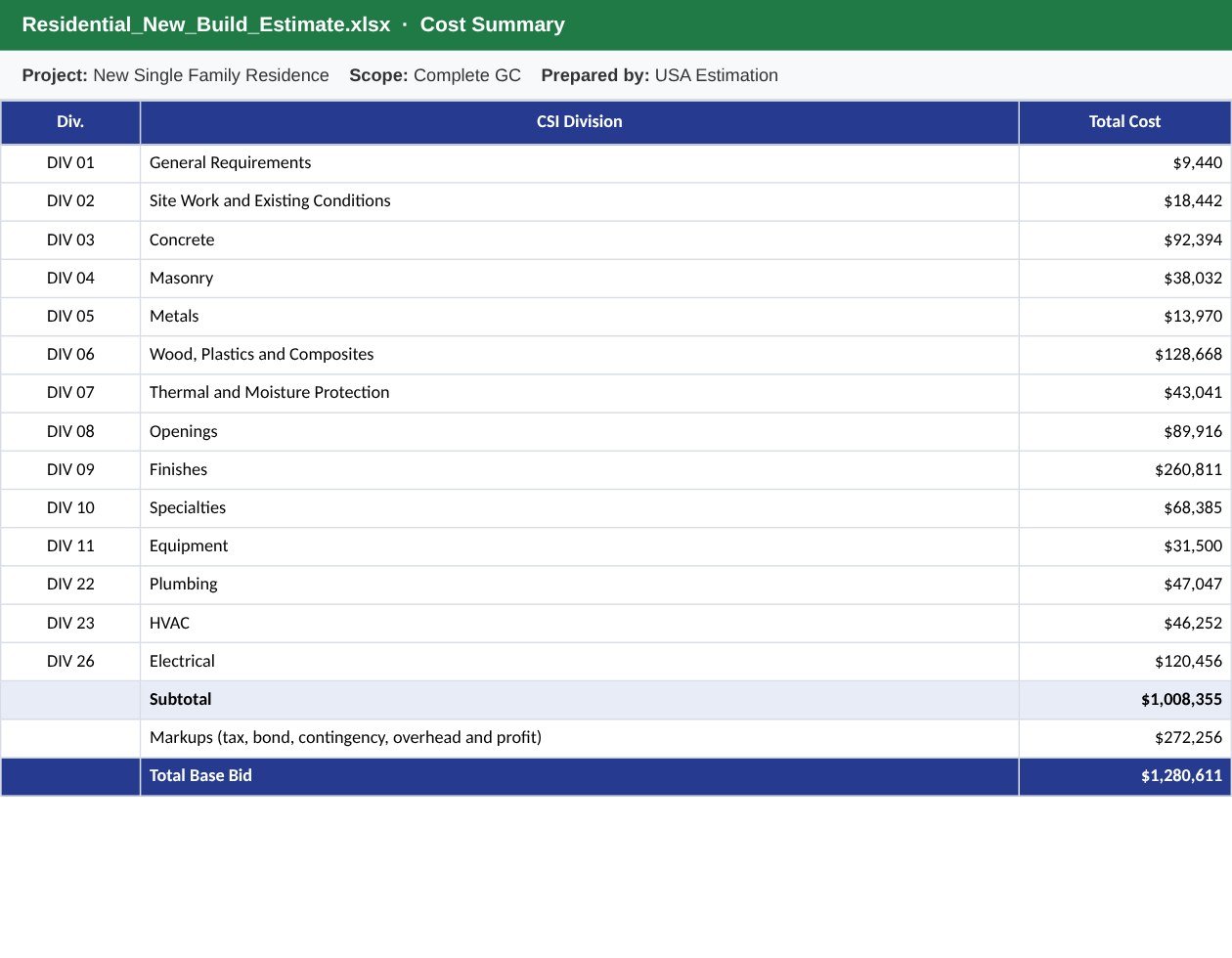
The bid letter is only as good as the estimate behind it. Before you write the bid, you need quantities for every item and a price for material, labor and equipment, then overhead, profit, bond and contingency. A clear CSI division breakdown makes the bid easy to review and easy to defend.
Write Strong Exclusions
Most disputes start with work that one side thought was included. List exclusions clearly. Common exclusions include permits and fees, utility company charges, testing and inspections, rock excavation, hazardous material removal, landscaping, furniture and owner supplied equipment. If you are not sure whether an item is included, ask before bid day and state your assumption in the bid.
Common Bid Mistakes
- Pricing an old drawing set and missing an addendum.
- Leaving out general conditions, such as supervision, cleanup and temporary facilities.
- Copying an old bid without updating material prices.
- No expiration date, so the owner accepts months later at an old price.
- Vague scope descriptions like "all framing" instead of listing what is included.
Frequently Asked Questions
What is the difference between a bid, a quote and an estimate?
An estimate is your internal calculation of cost. A bid or proposal is the formal offer you send to the owner, based on that estimate. A quote often refers to a price for a single item or trade.
How long should a bid be valid?
Many contractors use 30 days. When material prices are moving quickly, a shorter period protects you.
Should I show my markup in the bid?
Usually not, unless the contract requires an open book price. Most bids show the total and the scope.
Need the estimate behind your bid?
We prepare complete estimates and trade takeoffs, organized by CSI division, so you can write your bid with confidence.
Get a Quote