Most painting bids are lost or lost money on in two places: the measurements and the labor. Gallons are easy to count once the areas are right, but the hours to cut in, roll and finish each surface decide whether the job pays. This guide walks through the method estimators use to price a painting job from plans or a walkthrough.
Step 1: Break the Job Into Surfaces
Before measuring anything, list the surfaces the job includes. Each one is measured in its own unit and painted at its own speed, so mixing them into one number hides the real cost.
- Walls, measured in square feet by room or by floor
- Ceilings, measured in square feet, with high or sloped ceilings kept separate
- Doors and frames, counted by each, with both sides included when specified
- Trim, base and crown, measured in linear feet
- Exterior siding, soffit and fascia, measured from the elevations
- Specialty items such as railings, columns, epoxy floors or metal doors
Step 2: Measure Walls and Ceilings
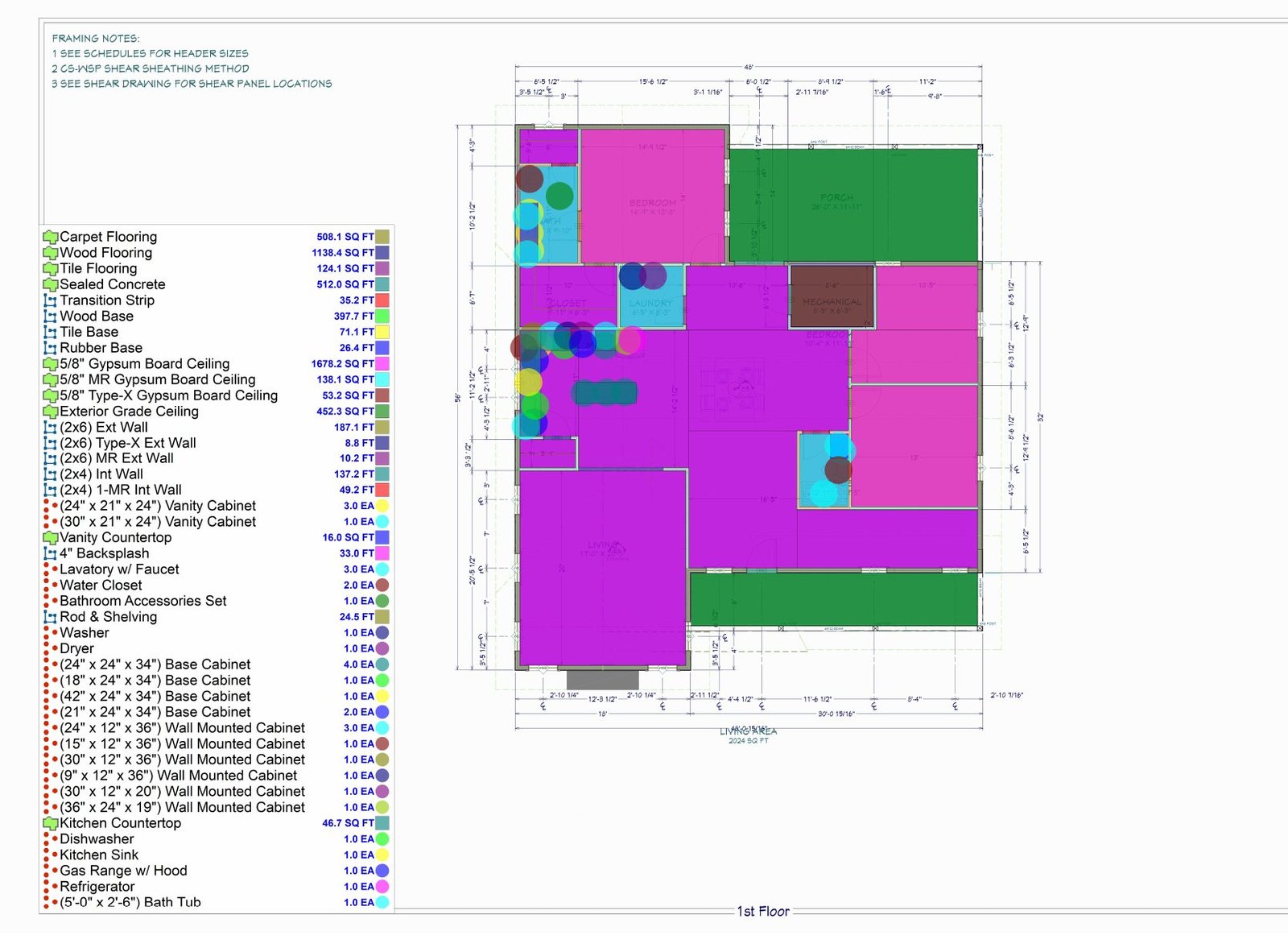
For walls, multiply the perimeter of each room by the wall height. For ceilings, use the floor area of the room. Read the finish schedule at the same time, because it tells you which rooms get paint, which get wall covering or tile, and which paint system each surface needs.
Openings are a judgment call. Many estimators deduct only large openings such as storefronts and wide cased openings, because cutting around a standard door or window takes about as long as painting the area it removes.
| Room | Calculation | Area |
|---|---|---|
| Office, 12 x 14 ft, 9 ft walls | (12 + 14) x 2 x 9 | 468 SF walls |
| Same office ceiling | 12 x 14 | 168 SF ceiling |
| Corridor, 60 ft long, 10 ft walls both sides | 60 x 2 x 10 | 1,200 SF walls |
Step 3: Convert Areas to Gallons
Divide each area by the spread rate of the product, then multiply by the number of coats. Spread rates come from the product data sheet and are often in the range of 300 to 400 square feet per gallon for one coat on a smooth surface. Rough, porous or new drywall surfaces take more paint, and a primer coat is usually its own line.
Add waste for spray work, color changes and touch up. Keep primer, finish paint and specialty coatings as separate lines, because they have different prices and a change order often affects only one of them.
Step 4: Price the Labor
Labor is usually the larger part of a painting estimate. Estimators use production rates, meaning how many square feet or how many doors a painter completes per hour, for each surface and method. Brushing and rolling walls is faster than cutting in trim, and a ceiling over 12 feet needs lifts or scaffolding that slow everything down.
- Use your own crew history when you have it, since it reflects how your painters actually work
- Separate prep work such as patching, caulking, sanding and masking
- Add time for moving furniture, protecting floors and daily cleanup on occupied jobs
- Price lifts, scaffolding and spray equipment as their own items
Step 5: Add Markup and Build the Bid
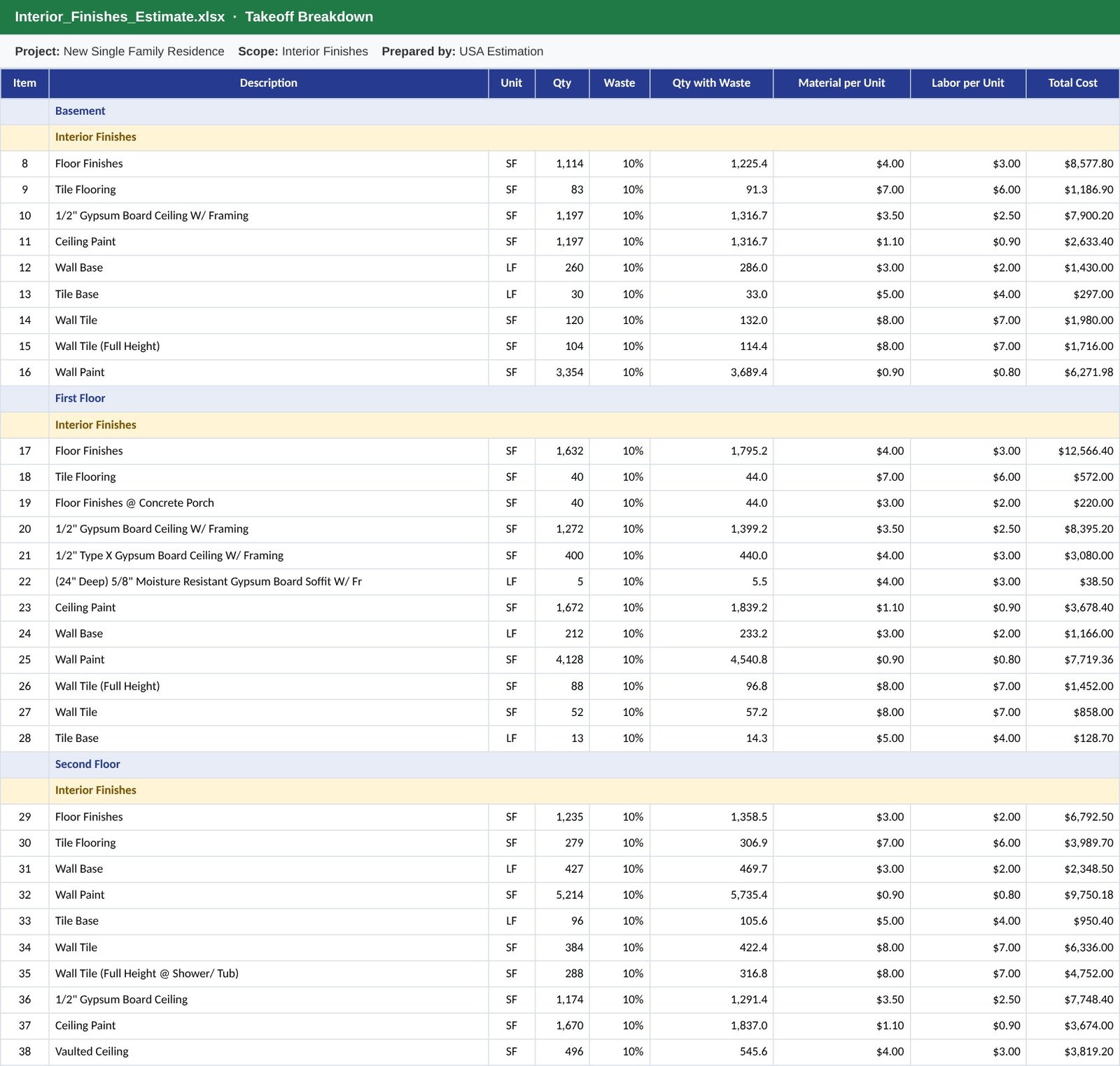
Add overhead, profit and any sales tax that applies to materials. Then write the bid so the client can see what is included: surfaces, number of coats, paint system, colors, and what is excluded, such as wall covering, drywall repair beyond normal patching, or work by other trades.
For commercial work, organize the price by floor or by area so the general contractor can compare it with other bids line by line. A clear scope often wins the job even when the number is not the lowest.
Common Mistakes to Avoid
- Pricing every surface at one rate per square foot
- Missing ceiling heights in lobbies, stairwells and gyms
- Forgetting doors, frames and trim when the drawings only show walls
- Skipping the paint schedule, which can call for primers or epoxy systems
- Leaving out protection, cleanup and punch list time
If you would rather send the plans than do the takeoff yourself, see our Painting Estimating Services.
Frequently Asked Questions
How much paint do I need per square foot?
Divide the area by the spread rate on the product data sheet and multiply by the number of coats. Many wall paints cover about 300 to 400 square feet per gallon per coat on a smooth surface.
Should I bid painting by the square foot or by the hour?
Measure by area and count, then price with production rates for each surface. A single price per square foot works only when the job is very similar to past jobs.
What drawings do I need to estimate painting?
Floor plans, elevations, sections, the finish schedule and the paint specification. For exterior work, the building elevations are the most important sheets.
Need a painting takeoff for your next bid?
We measure every wall, ceiling, door and trim item from your plans and deliver quantities and pricing in editable Excel, usually within 24 to 48 hours.
Get a Quote