
An electrical estimate is mostly counting and measuring, followed by careful labor pricing. Miss a panel schedule or a run of feeder and the bid is short. Overprice the labor and it goes to someone else. This guide follows the order most electrical estimators use, from the drawings to the final number.
Step 1: Review the Drawings and Specs
Start with the electrical legend, the general notes and the specifications. They tell you the wiring method, conduit type, minimum wire size, box requirements and which items are furnished by others. Then read the panel schedules and the one line diagram, which show the service, distribution and every feeder you will price.
Step 2: Count Devices and Fixtures
Count every symbol on the plans by type: receptacles, switches, data outlets, light fixtures, exit signs, sensors and equipment connections. Use the fixture schedule to price each fixture type separately, because a decorative pendant and a 2 x 4 troffer have very different costs and labor.
- Receptacles and switches by type, such as duplex, GFCI, dimmer or occupancy sensor
- Light fixtures by schedule type, including emergency and exit fixtures
- Equipment connections for HVAC units, pumps, water heaters and kitchen equipment
- Low voltage items when they are in your scope, such as data, security or fire alarm
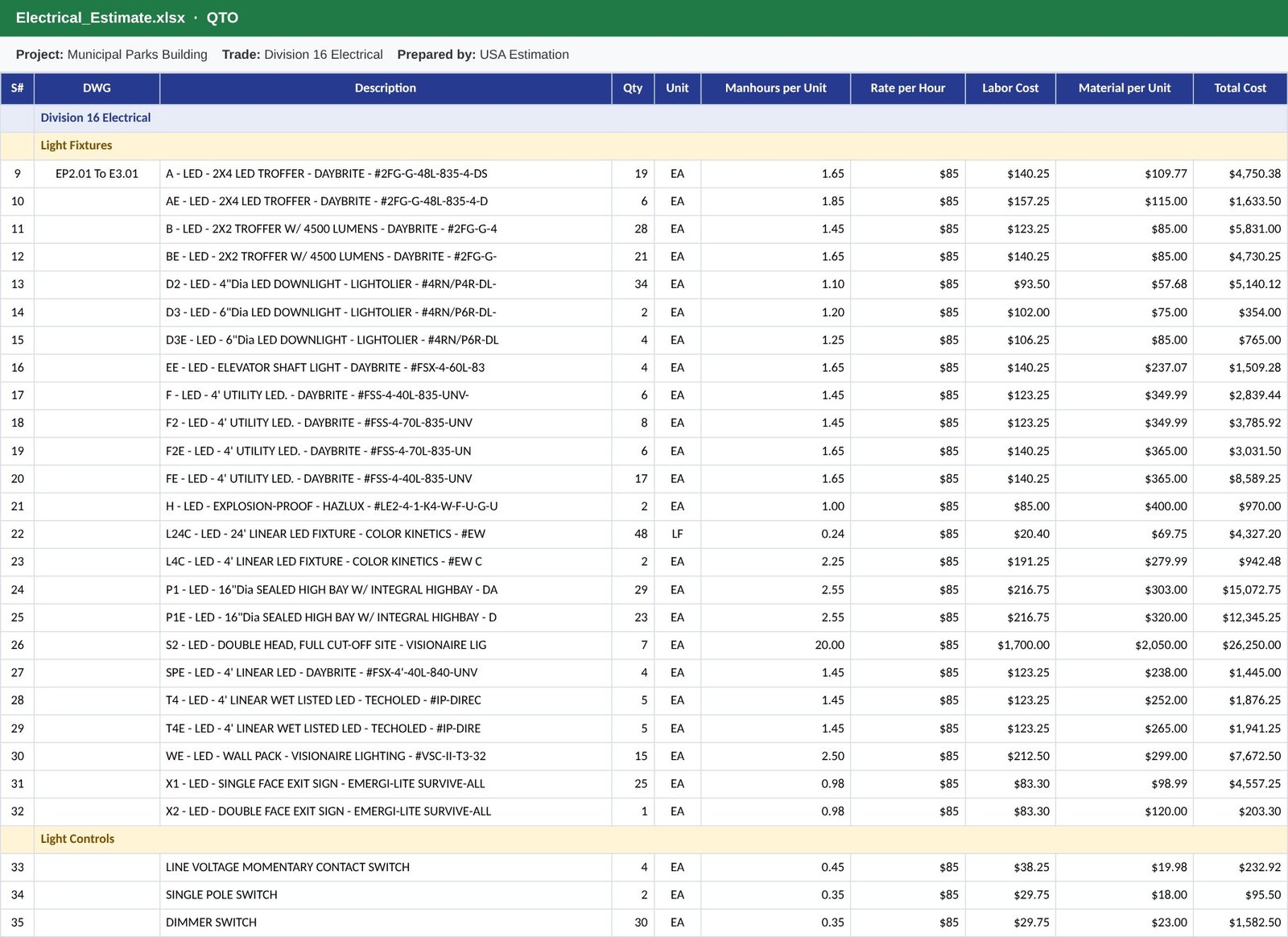
Step 3: Measure Conduit, Wire and Feeders
Measure branch circuit runs from the panel to each device or group of devices, adding vertical drops to switch and outlet heights. Measure feeders from the one line diagram and the riser, then add wire for each conductor in the conduit. Keep conduit size, conduit type and wire size as separate lines so they can be priced correctly.
| Item | How it is measured | Unit |
|---|---|---|
| Branch conduit | Plan length plus drops to each device | LF |
| Wire | Conduit length x number of conductors, plus makeup | LF |
| Feeders | One line diagram and riser, by size | LF |
| Panels and gear | Panel schedules and one line diagram | EA |
Step 4: Apply Labor Units
Labor is priced with labor units, the hours needed to install one unit of each item under normal conditions. Many contractors start from published labor unit manuals and adjust them with their own job history. Then factor the conditions: working height, existing buildings, occupied spaces, phased work and difficult access all add time.
- Use separate labor for rough in, wire pulling, trim out and testing
- Add time for coordination with other trades on busy commercial jobs
- Price lifts, trenching and core drilling as their own items
Step 5: Price Gear, Quotes and Markup
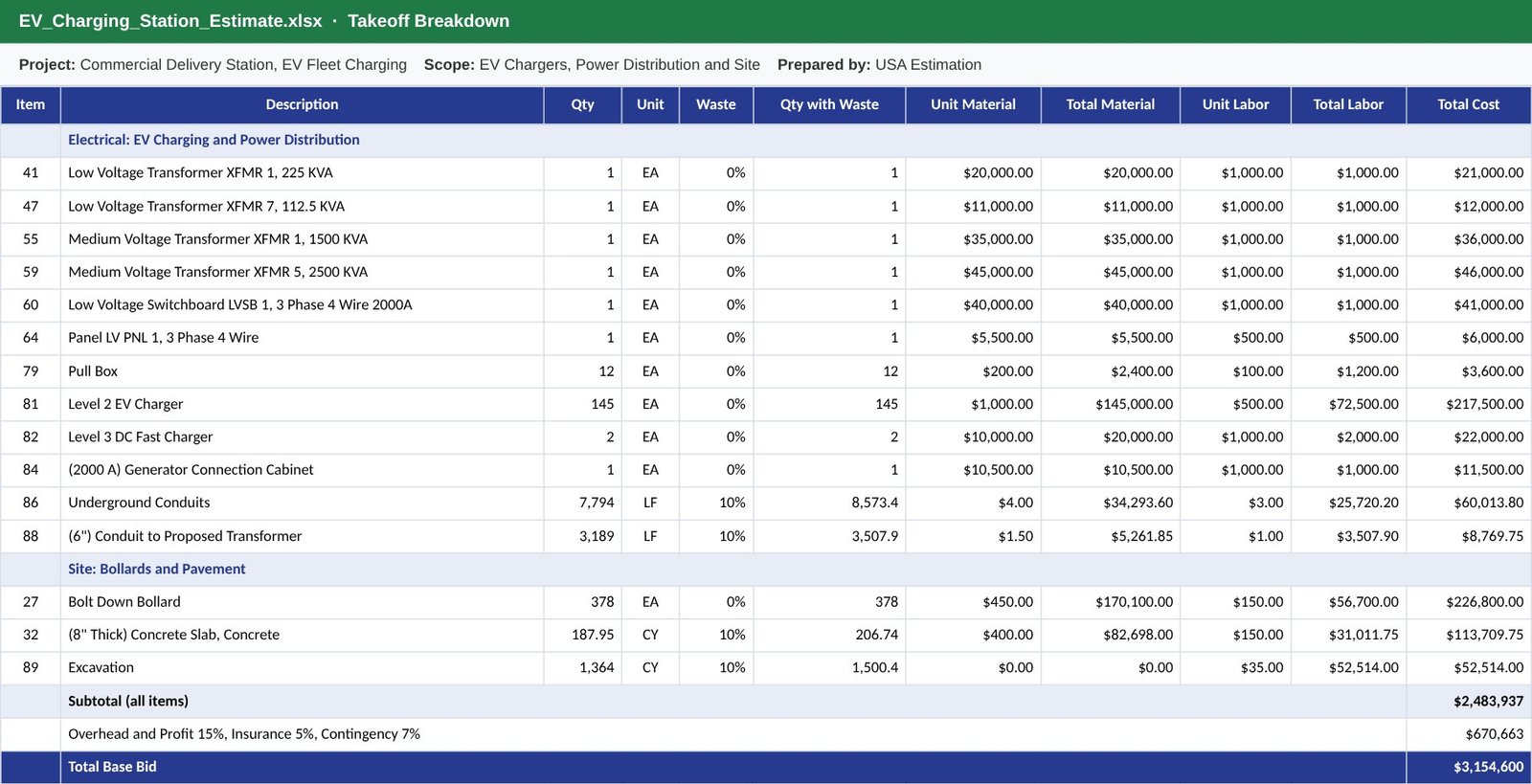
Switchgear, panelboards, transformers, generators and lighting packages are usually priced from supplier quotes. Request them early and note what each quote includes. Then add overhead, profit, permits, temporary power if required, and any sales tax on materials.
Common Mistakes to Avoid
- Skipping the general notes and specifications
- Pricing all fixtures at one cost instead of by schedule type
- Forgetting equipment connections shown on mechanical and plumbing sheets
- Missing grounding, bonding and fire stopping
- Using one labor rate for new work and renovation work
If you would rather send the plans than do the takeoff yourself, see our Electrical Estimating Services.
Frequently Asked Questions
What is the fastest way to estimate electrical work?
Count devices and fixtures by type, measure conduit and wire by size, then apply labor units. A digital takeoff speeds up counting, but the labor still needs your judgment on site conditions.
How do electricians price labor on a bid?
Most use labor units for each item, adjusted for working height, renovation, access and schedule, then multiply the total hours by their crew rate.
Do I need the mechanical drawings for an electrical estimate?
Yes. Mechanical and plumbing sheets show the equipment that needs power, and those connections are easy to miss if you only read the electrical set.
Need an electrical takeoff for your next bid?
We count every device and fixture and measure conduit, wire and feeders from your plans, delivered in editable Excel, usually within 24 to 48 hours.
Get a Quote